
We’ve got not one–but two–fragments buried deep within the bunkhouse… this time, from the desert of Soviet Turkmenistan.
The Gunesh Ensemble (ВИА «Гунеш») were a jazz-fusion group formed in 1970 in Ashgabat. Their style blended traditional Turkmen instruments and melodies with frantic fusion and progressive rock. They are most notable for their two studio albums: the eponymous Gunesh (1980) and Looking at the Earth (1984). However, prior to those albums, they have recorded much more obscure songs; two of those include “Nar agajy” (Pomegranate Tree) and “Yelpesene” (Hello). Unlike what they would later record, the two songs are in a Beatles-like vocal style with some ethnic flair. The interconnected music videos for them, which originate from an unknown film, are sometimes played on the Turkmenistan state-owned television channel Miras via the program Arhiwden (From the Archive).
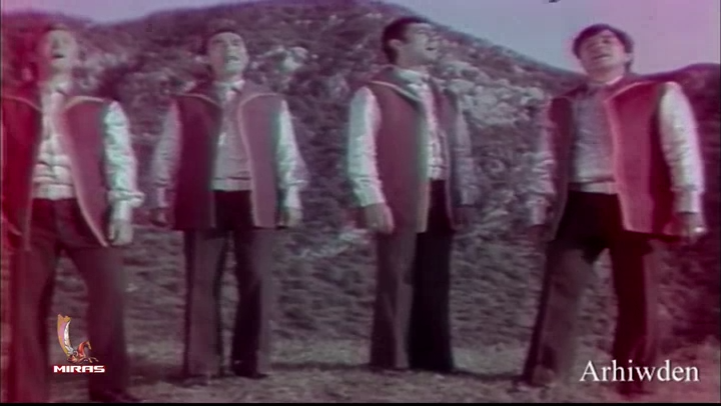
The first song, “Nar agajy”, is a slow, somber tune set to peasant women picking pomegranates from trees and carrying baskets filled with them, as the four band members at the time sing at the midst of a mountain. The video ends with various shots of a waterfall, just before transitioning to the upbeat and jazzy “Yelpesene”. The upbeat section of the song unfortunately lasts for around 30 seconds before transitioning into an acapella section and finishing off with a reprise of “Nar agajy”.
Despite the incredible obscurity of those two songs, they are nonetheless recommended for Gunesh fanatics who wish to dive deeper into their discography.
Comments
comments powered by Disqus